CLIENT // 001
FRONTIER LAB
SC · 47K STRANDS
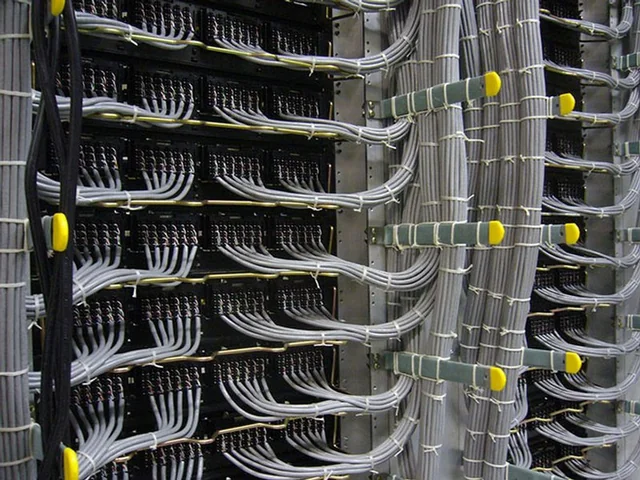
We are the cabling layer of America’s AI buildout — factory pre-term, RCDD-stamped, zero on-site rework. 312 technicians across 13 states. We’re the part of the buildout you can stop worrying about.
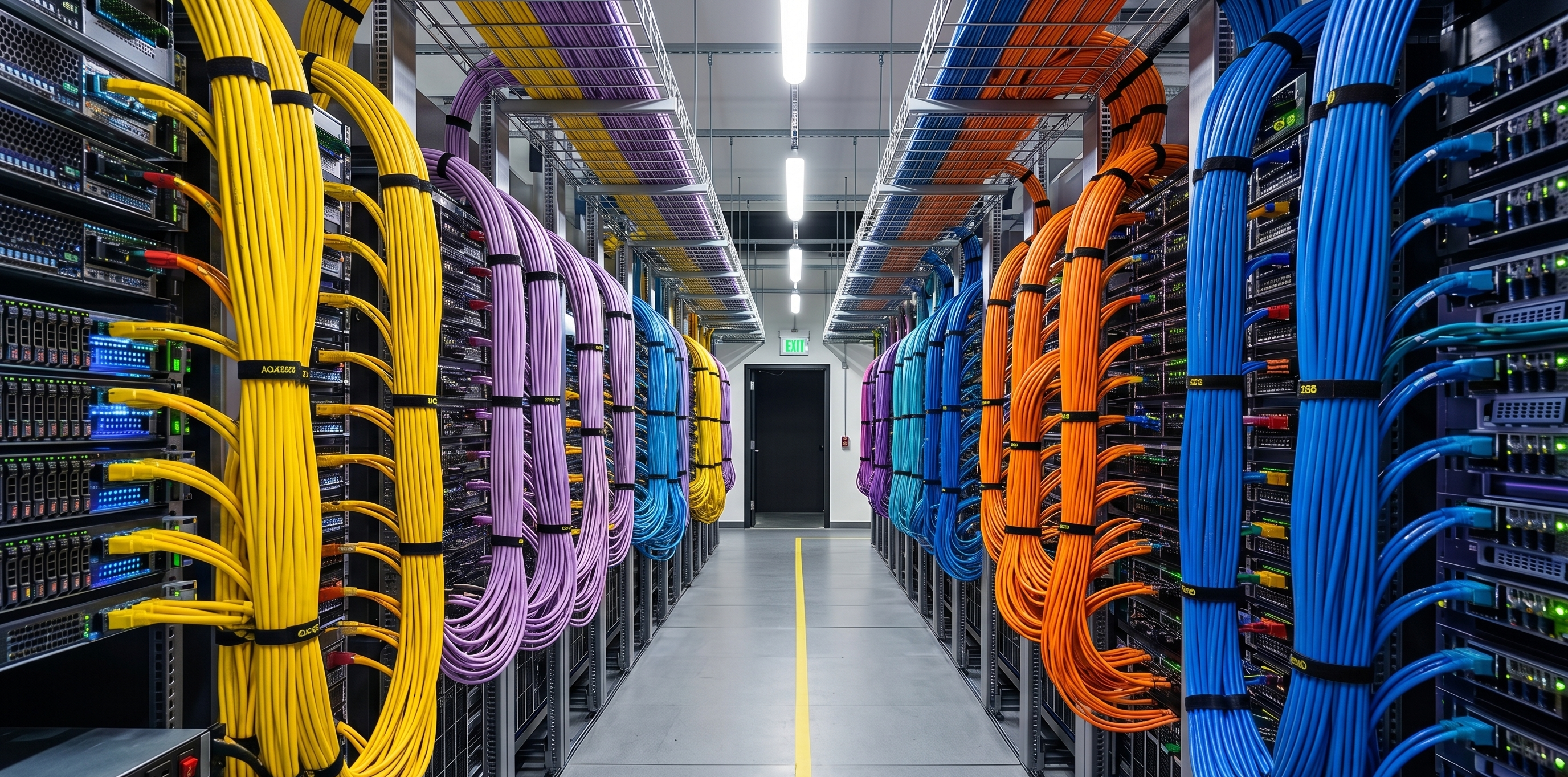
Structured low-voltage cabling subcontractor, built for one job: standing up the physical fiber and copper backbone of America’s hyperscale data centers. We do not paint. We do not chase enterprise office work. We do not do residential. We pull, terminate, test, certify, and document the cabling that keeps GPUs talking to GPUs.
Our footprint runs the Southeast, Mid-Atlantic, and Ohio Valley: North Carolina, South Carolina, Georgia, Virginia, Tennessee, Alabama, Florida, Ohio, Kentucky, West Virginia, Maryland, Delaware, and Pennsylvania. Charlotte to Memphis to Ashburn to New Albany — a 6-hour radius of every gigawatt campus that matters.
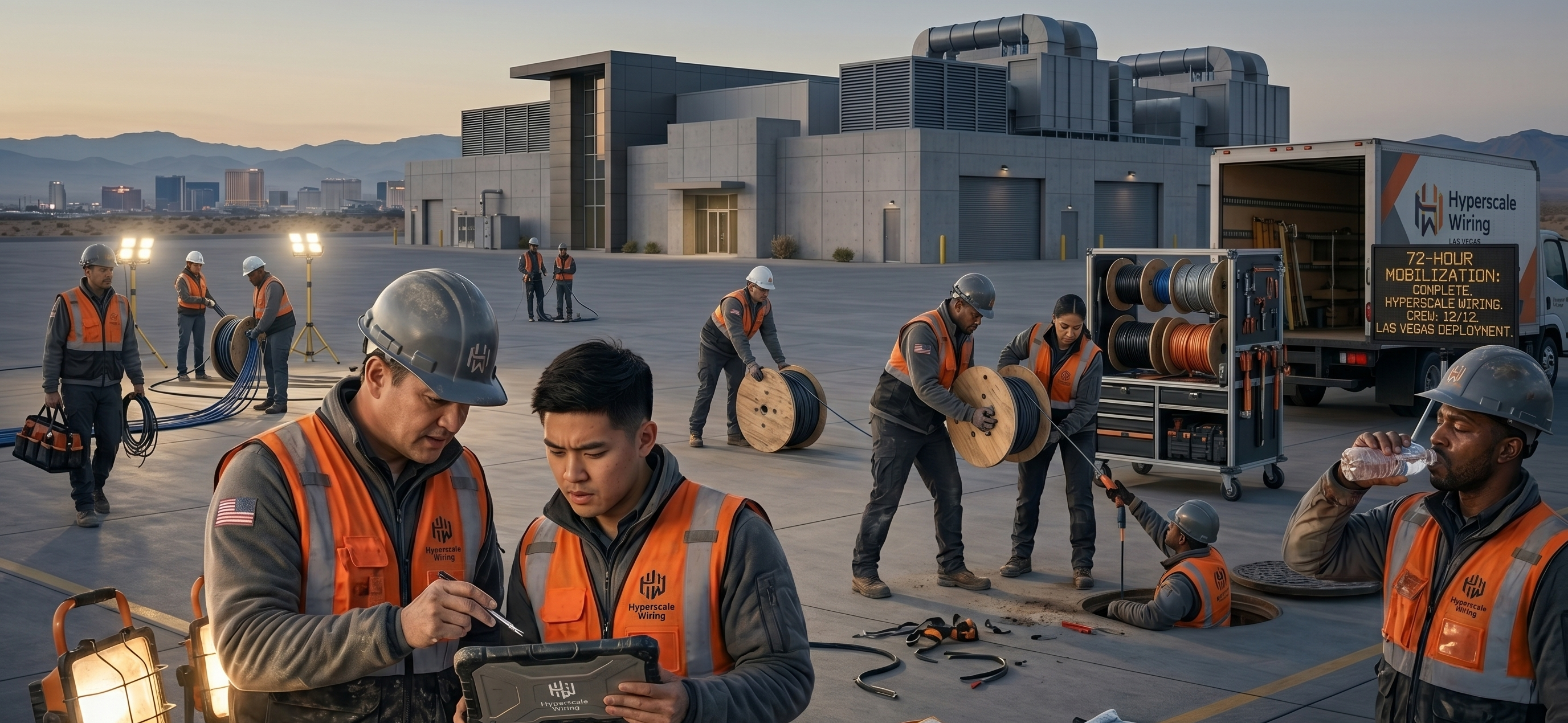
300+ active BICSI-certified technicians on roster. Foremen in the trucks. Superintendents on the campus. RCDDs at the design table. We mobilize crews of twelve in seventy-two hours, fifty in two weeks, one hundred in a month.
The AI build-out is the largest physical infrastructure program in American history. The general contractors and electrical primes building it cannot afford a cabling sub that is anything less than absolutely focused.
Single-mode OS2 and ultra-low-loss multimode OM4/OM5 backbone systems for spine-leaf, ToR, and EoR architectures. MTP-12/24/16 trunks up to 1.6T-ready. Fusion splicing on every strand. 25-year manufacturer warranties.
Pre-engineered, factory-pretested fiber and copper trunks staged at our regional kit center and delivered ready to land. No field termination. Eliminate the variable that owns your schedule risk.
Cable tray, ladder rack, basket tray, J-hook, and overhead containment to TIA-942 and BICSI 002. Pre-fabricated risers and overhead trestles when schedule demands.
Full Tier 1 / Tier 2 testing on every link: insertion loss, ORL, OTDR bidirectional traces, link length, event analysis. Reports delivered in customer format inside 24 hours.
Cabinet placement, leveling, anchoring, bonding to MGB. Server, switch, PDU rack-and-stack to your IO standard. Hot/cold-aisle containment. Cage builds to RFP spec.
Day-2 moves, adds, changes, and decommission. 24/7 emergency response across the 13-state footprint. Mean time to resolution: 4.2 hours. Quarterly health audits on subscription.
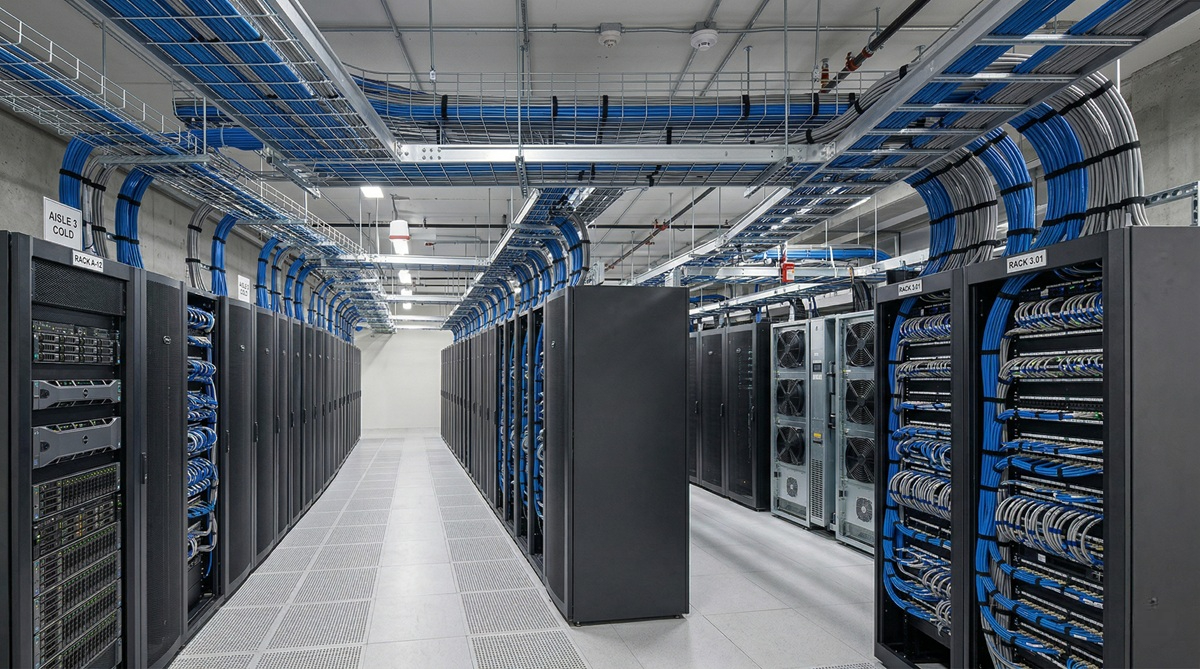
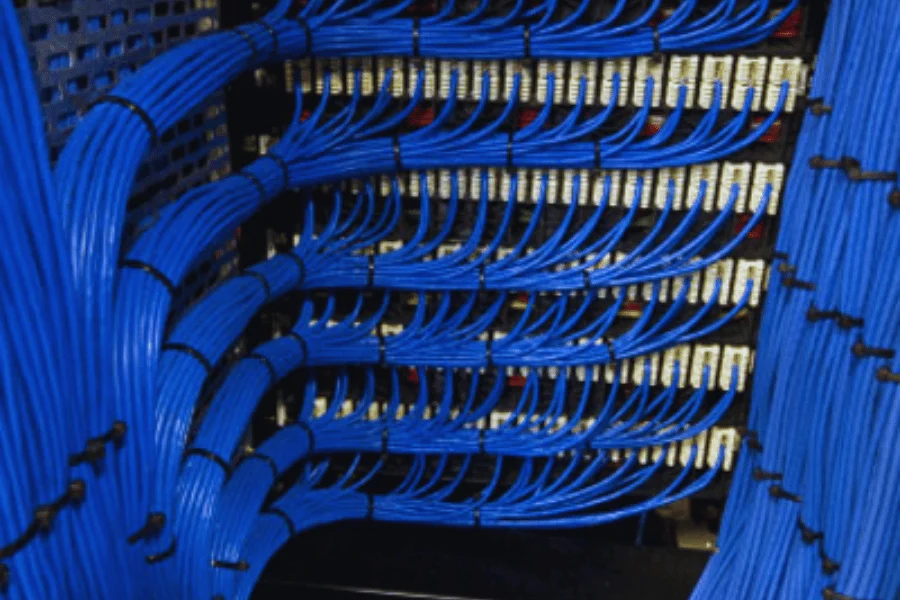

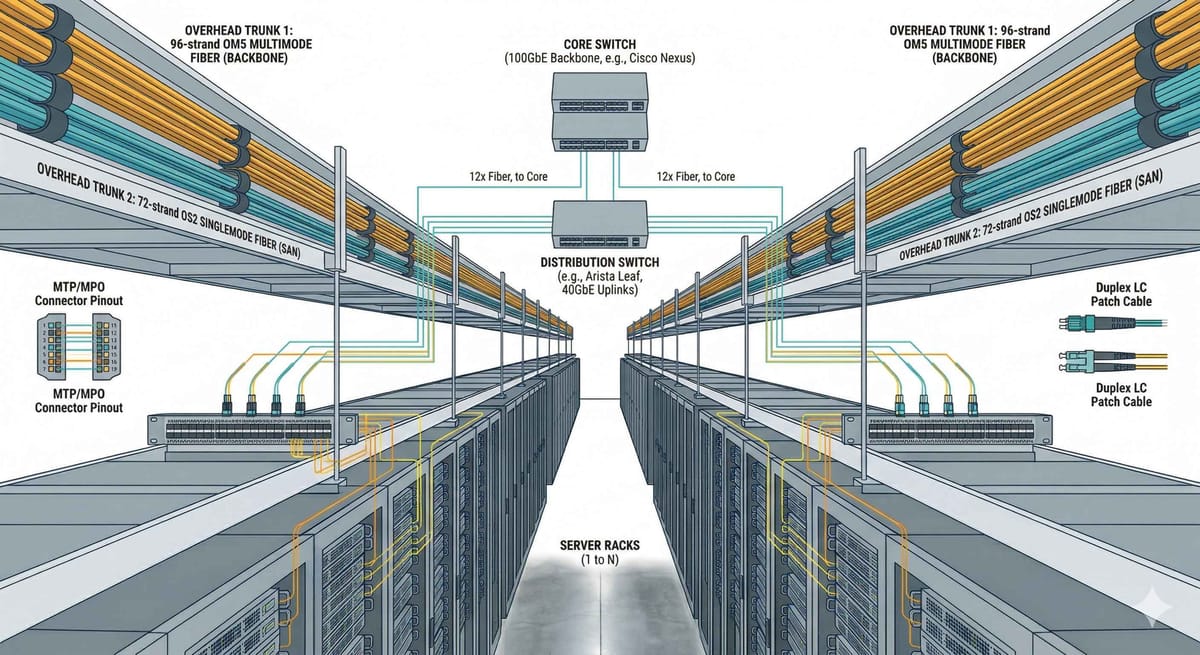
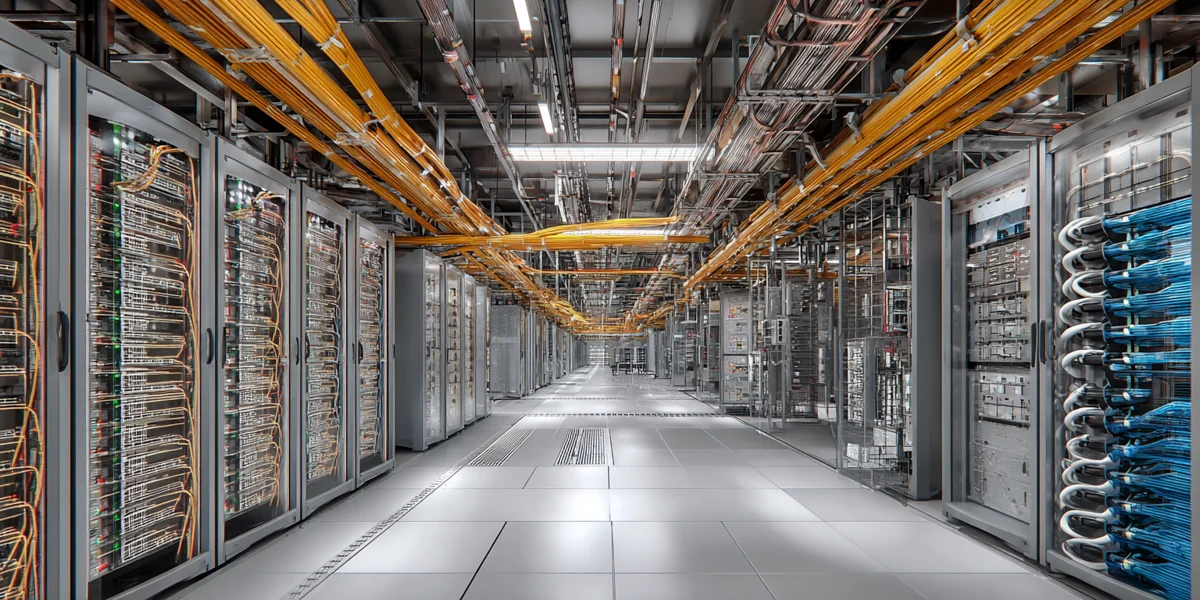
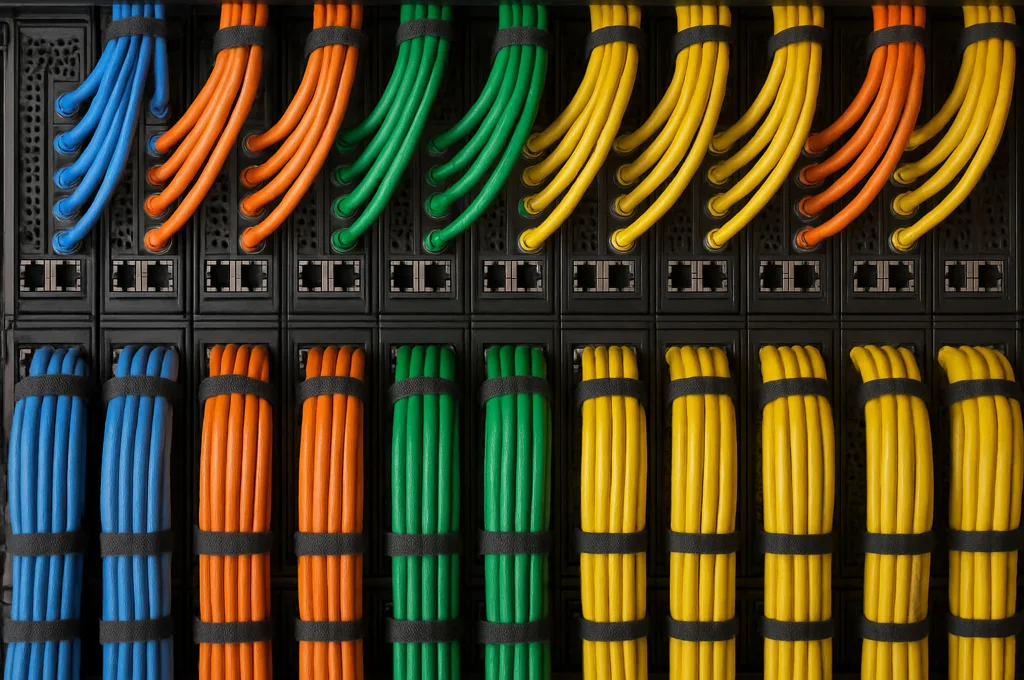
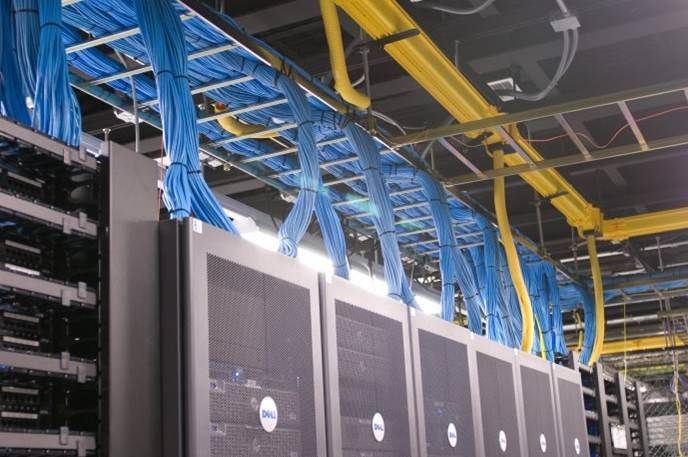

A 1.6T NDR InfiniBand link does not care about your schedule. It cares about insertion loss, return loss, polarity, length, bend radius, bonded ground, and the four hundred seventy other variables that govern whether a strand of glass passes a Tier-2 OTDR trace. Here’s what we’re actually engineering against.
A 100m OS2 spine link with two MPO-12 mating pairs and one fusion splice has a nominal insertion loss budget of 1.4 dB. Each ULL connector pair eats 0.15 dB. Each fusion splice eats 0.05 dB. Bend a fiber past its minimum bend radius and you can lose another 0.3 dB at a single corner. Get above the budget and the optic dark-fibers under traffic.
Cooling capacity has run away from cabling pathways. A modern 132kW liquid-cooled cabinet supports up to 1,728 fiber strands at 144 strands per RU on the front face — which means an MPO-24-based architecture and overhead trestle pathways sized for the trunk count. You do not retrofit pathway. You design it before the slab is dry.
At 100GBASE-SR4 the equipment is rejecting common-mode noise at ±150 mV. A cabinet bonded to the MGB (master ground bus) at 0.1 ohm survives that. A floating cabinet does not. We bond to TIA-607 Class B with twin #6 AWG bus drops and document continuity to 5 milliohms — every cabinet, every time.
Every other trade can finish around active equipment. The cable plant cannot. Once cabinets are landed and circuits are energized, your installer is working hot, and your productivity collapses by 60–70%. We staged trunks at our regional kit center for a reason — install rate triples when the strand is already terminated when it arrives.
Every generation of computing has been gated by the unsexy layer underneath it. Right now, that layer is structured cabling — and the United States is short on the people who can install it correctly, at scale, in time.
The headlines belong to the GPUs. The financing belongs to the substations and the chillers. But ask anyone who has actually delivered an AI campus and they will tell you the same thing: the schedule risk lives in the cable plant. A megawatt of compute landed three weeks late costs the operator more than the entire annual budget of the team that pulled the fiber. And almost every megawatt is landing late.
The reason is structural. Structured cabling is one of the last skilled trades in the data-center stack that has not consolidated. It is performed by hundreds of regional contractors, most of them under fifty employees, almost none of them built for the density, schedule, and tolerances a modern AI hall demands. The work was sized for enterprise IDFs. The market shifted to sixteen-hundred-strand fiber trunks, factory pre-term, twenty-four-hour Tier-2 deliverables, and overhead trestles installed before the slab is dry. The supply side did not shift with it.
We started Hyperscale Wiring to be the supply-side answer. Not a general contractor. Not a low-voltage shop. A specialist firm that does one thing — the cabling layer — at the standard a hyperscaler audits against. Factory-pretested trunks staged at our regional kit center. RCDD-stamped drawings before a strand is pulled. Bidirectional OTDR on every link. As-built documentation in the customer’s format inside twenty-four hours of test completion. Zero field termination. Zero on-site rework. Zero schedule slip attributable to the cable plant.
We are headquartered in Indian Trail, North Carolina, because the next decade of American AI compute is being built within a one-day drive of here. We operate across thirteen states — the Southeast, the Mid-Atlantic, and the Ohio Valley. We are a non-union shop on union-shop discipline, with an EMR of 0.71 and a TRIR of 0.42. We have placed nineteen-thousand-seven-hundred-thirty-four route-miles of fiber in the last twelve months. We intend to place a hundred thousand more.
If you are an owner, an EPC, or a hyperscaler reading this — you already know the cable plant is the variable that owns your fit-out schedule. We’re the part of the buildout you can stop worrying about.
We pay top-of-market for the best low-voltage hands in America.
If you’ve pulled fiber on a hyperscale floor, fused MTPs in a cold aisle at 2 a.m., or run a crew of twelve through commissioning — we want you. W2 employment, full benefits, per-diem and travel covered, BICSI training paid for. Foremen-track and superintendent-track laid out at hire.
No staffing agencies. No 1099 churn. We invest in our people for decades.
BICSI INST2+ or equivalent. Fusion splicing, OTDR, MTP termination. 5+ years on data-center floors.
Run 8–12 person crews. RCDD-track. Read drawings, manage submittals, own daily QA. OSHA-30 required.
Pathway design, fiber budgets, BoM engineering for 20MW–400MW campuses. Revit + AutoCAD.
Own a campus end-to-end. GC interface, schedule, safety, budget. 10+ years mission-critical.
Factory-build pretested trunks. Climate-controlled shop. Day shift. Apprentice-friendly.
No experience required. We pay for BICSI INST1, OSHA-10, and the first year of the trade. Veterans encouraged.